
Survey: Flattery or Red Flag? How Compliments Shape Modern Dating
On March 1, World Compliment Day reminds us how powerful kind words can be. But in modern dating, compliments don’t always land the way they’re intended. Sometimes, they spark a connection. Other times, they trigger the ick.
To understand how praise, flattery and love-bombing are perceived today, Hily surveyed 3,500 American Gen Z and Millennial daters. The results show a delicate balance: compliments can build chemistry or break trust; it all depends on timing, tone and intention.
Here are key findings from our most recent survey:
- For 51% of young American women and 28% of men, too many compliments early in dating feels like a red flag.
- A whopping 72% of young American women—compared to just 12% of men—have received compliments on dating apps that felt more inappropriate than flattering.
- It makes 59% of young American women (compared to 35% of men) anxious when a date compliments something about their appearance that they’re insecure about.
- Of those surveyed, 72% of young American women and 53% of men feel more comfortable receiving compliments about their personality than their appearance.
When Flattery Feels Like a Red Flag
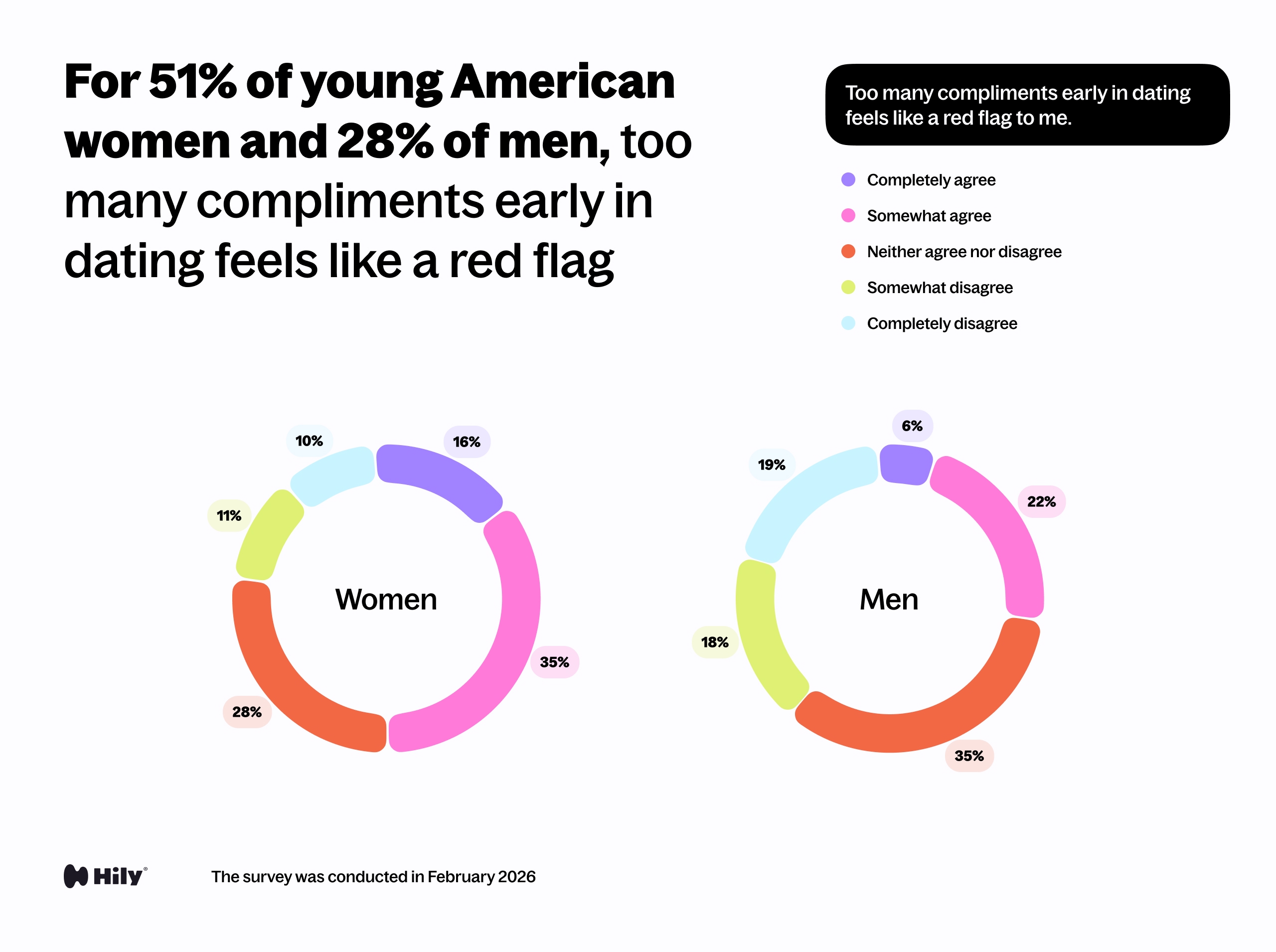
Not all praise is flattering. For over half (51%) of young American women, too many compliments early on feels like a red flag, compared to 28% of men. What’s meant to be romantic can easily seem rehearsed or excessive—especially when the connection hasn’t had time to grow naturally.
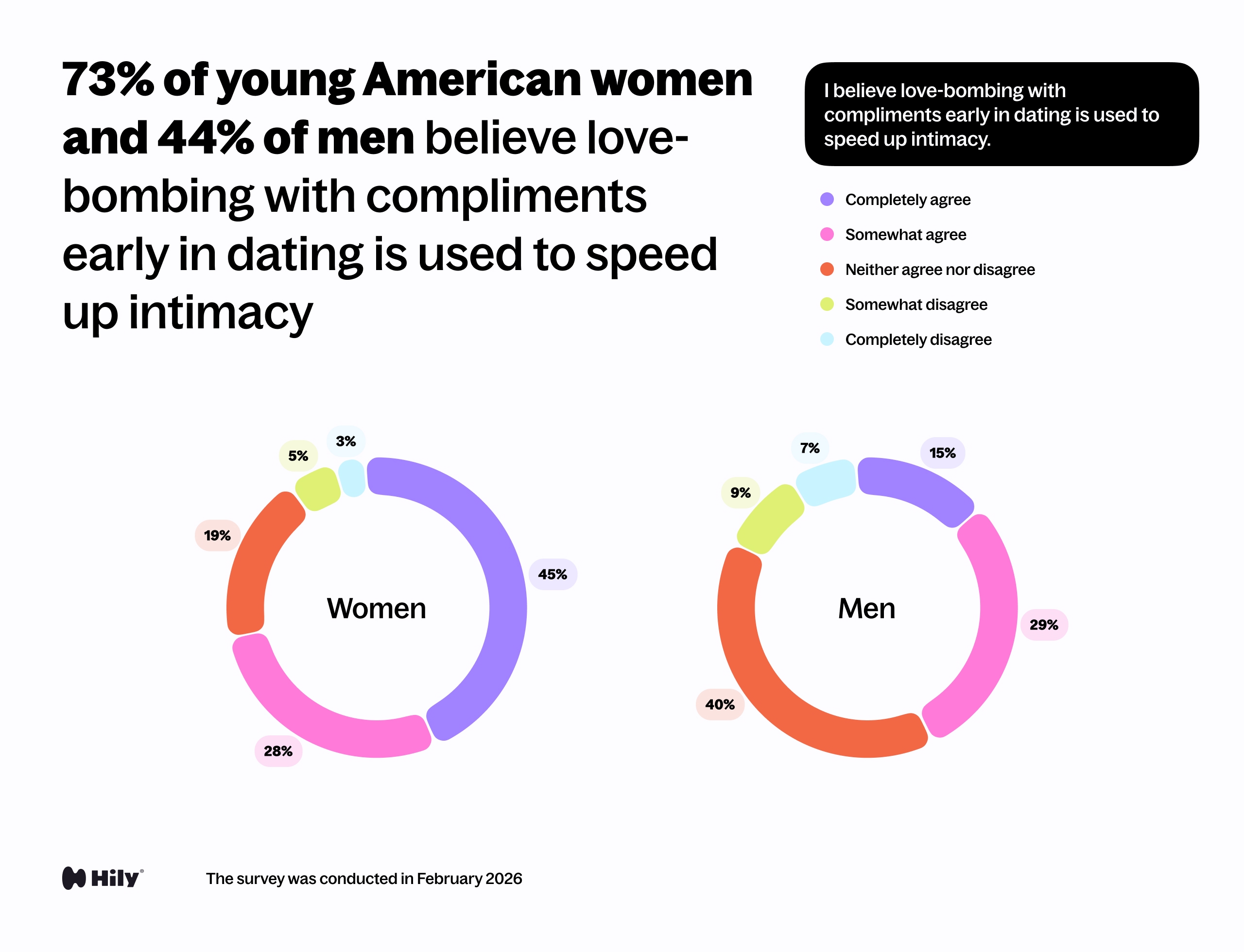
To some, too many compliments too soon is a clear sign of ulterior motives—73% of women and 44% of men believe love-bombing with compliments is a tactic to accelerate intimacy. For many, over-the-top praise doesn’t signal interest or passion; it signals pressure instead. Timing matters just as much as the words themselves.
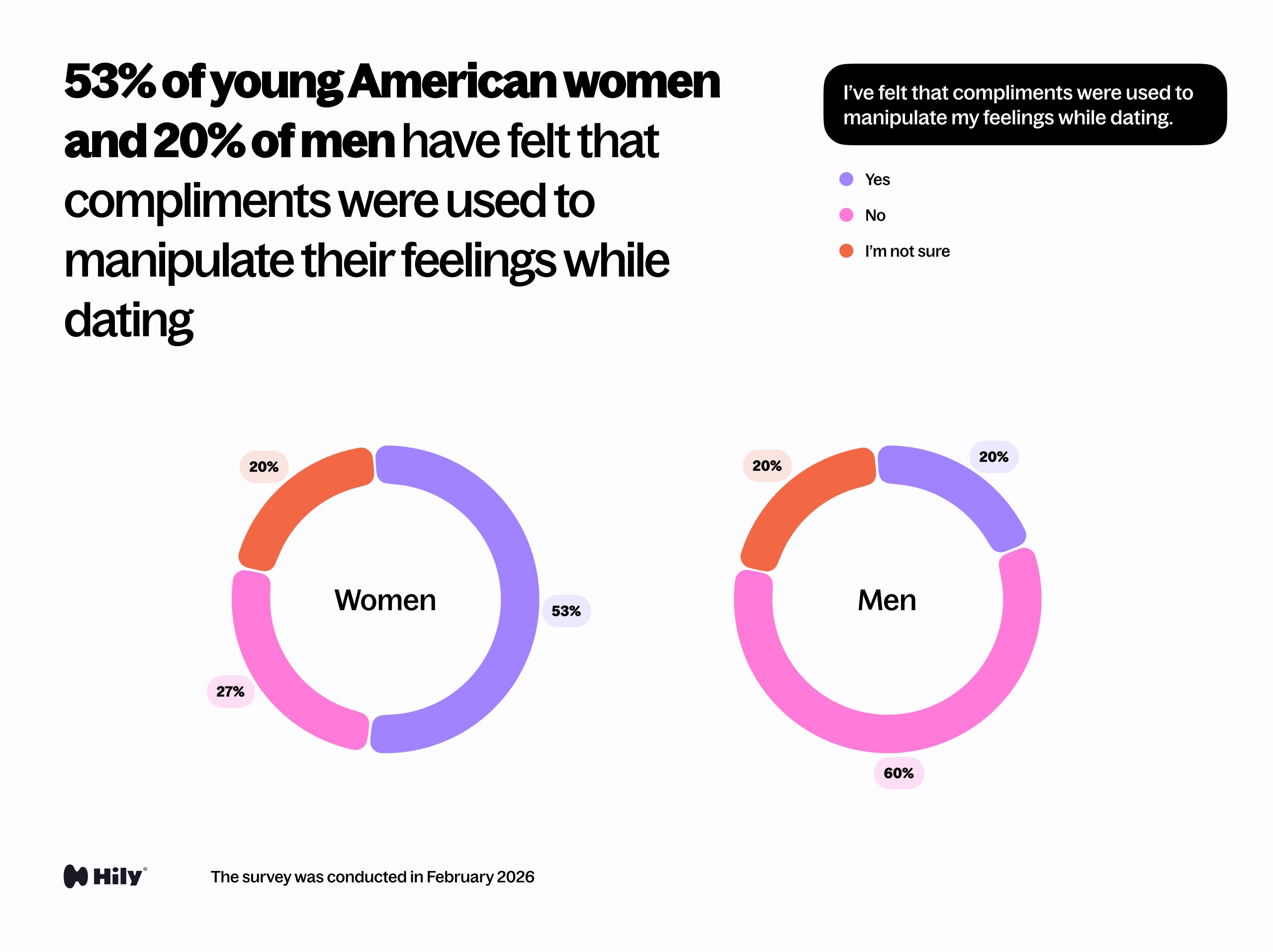
More than half (53%) of young women and 20% of men say they’ve felt compliments were used to manipulate their emotions. Compliments lose their charm when they feel strategic rather than sincere. In dating, authenticity is more attractive than exaggeration.
The Compliment Gap on Dating Apps
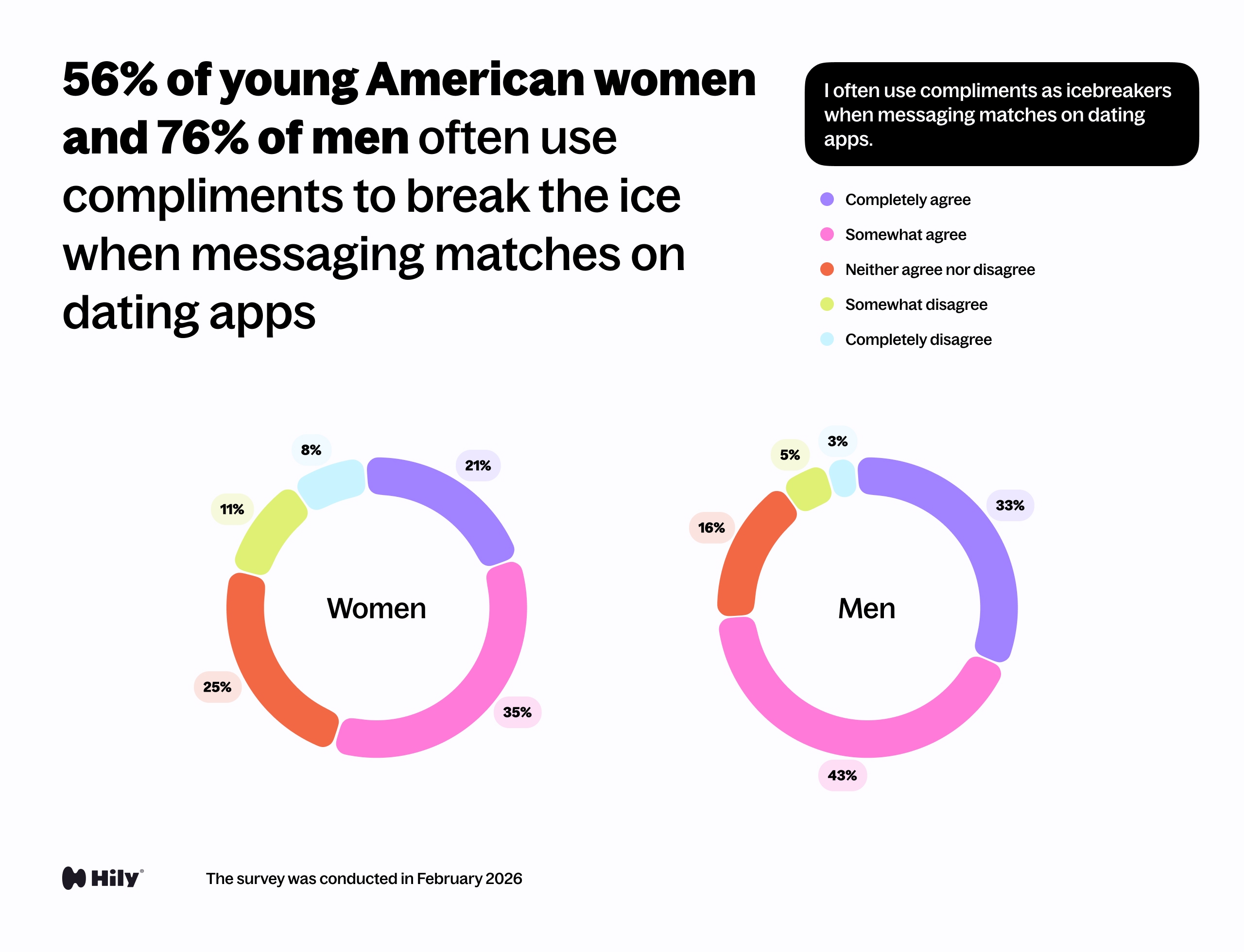
Compliments are a popular opener; 76% of men and more than half (56%) of women surveyed say they use compliments to break the ice and start a conversation on dating apps. Well-placed kind words can feel like a direct path to warmth, but clearly, not everyone receives them that way.
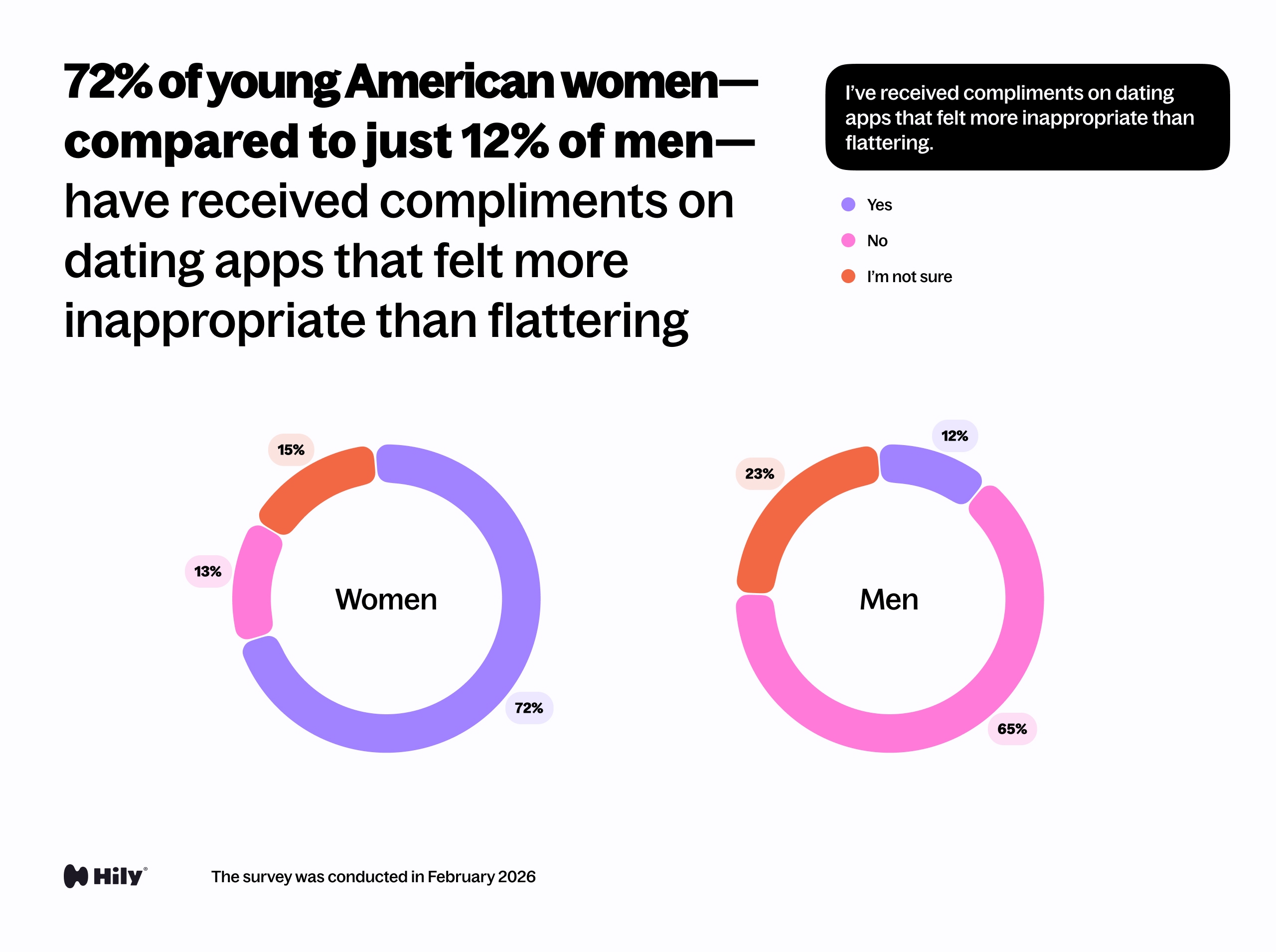
There’s a major gender divide when it comes to how compliments are received. In fact, 72% of young women—compared to just 12% of men—have received compliments on dating apps that felt inappropriate rather than flattering. What feels bold to one person may be uncomfortable for another.
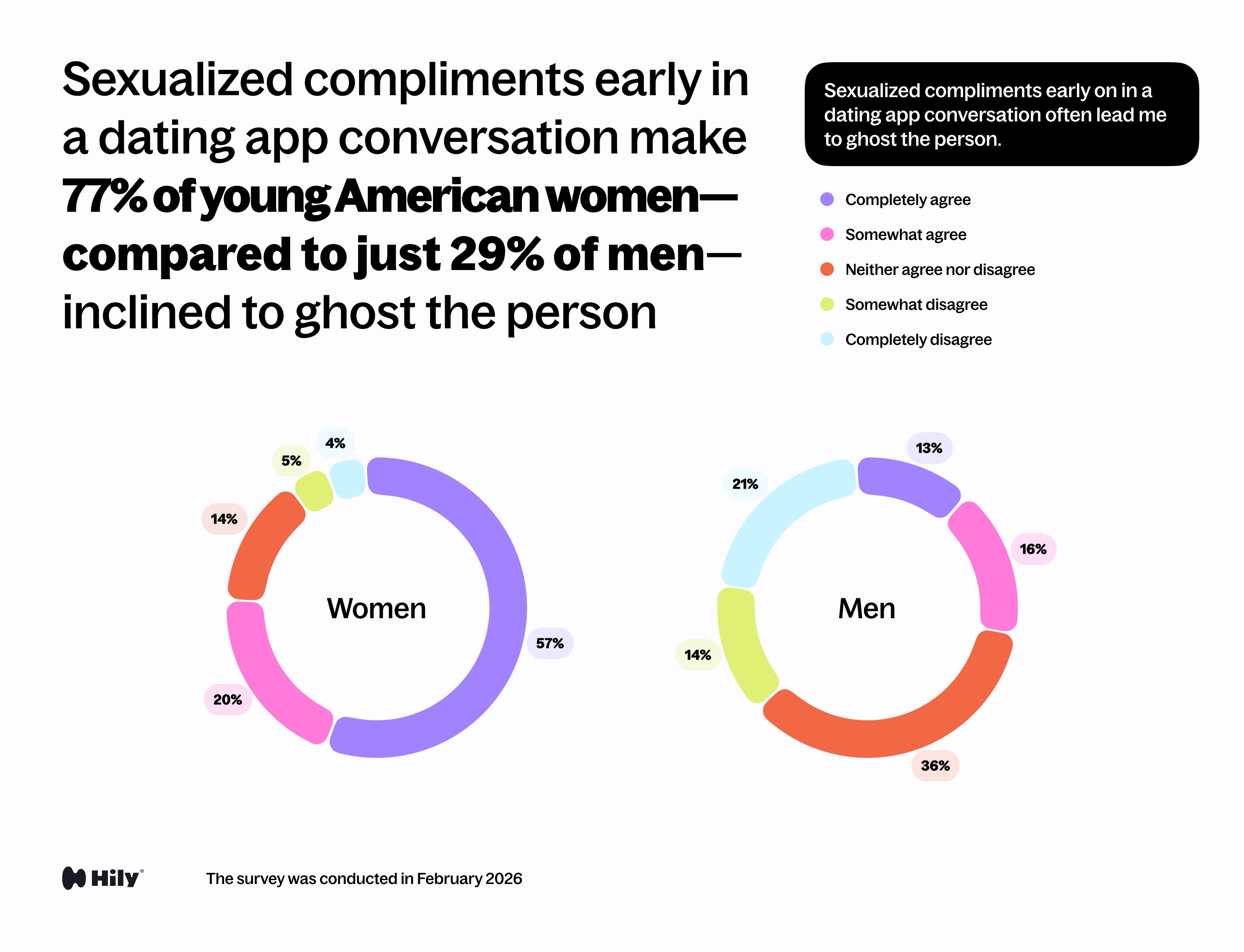
For 77% of women and 29% of men, sexualized compliments early in a conversation are reason enough to ghost someone. It’s not considered flirting when flattery crosses into objectification—and attraction can quickly fade away (or vanish without a trace).
Confidence, Comforting and “the Ick”
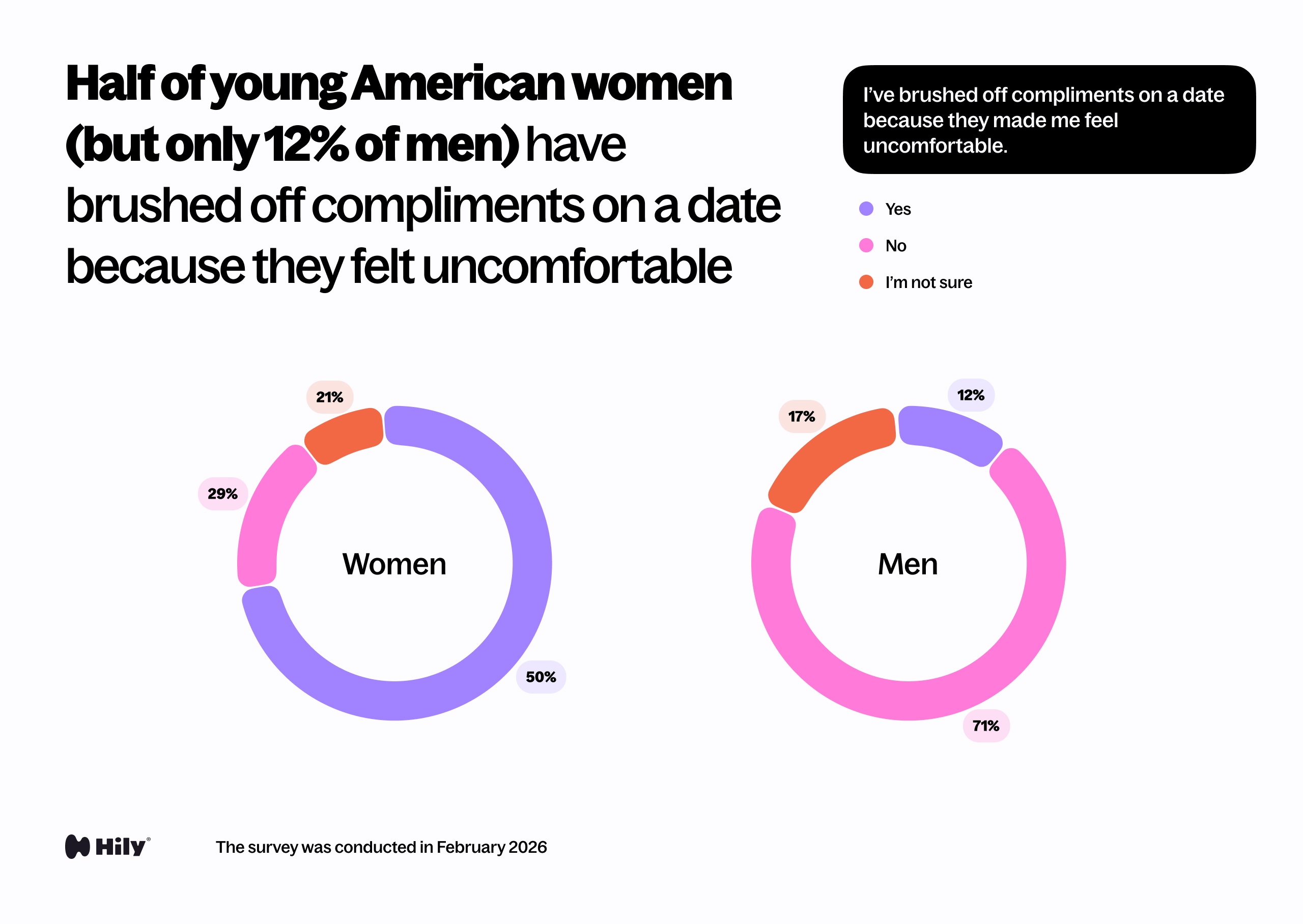
Only 12% of men—but half of young women—say they’ve brushed off compliments that made them feel uneasy. Even positive words and intentions can miss the mark and have the opposite effect if they feel too personal (or objectifying) too soon.
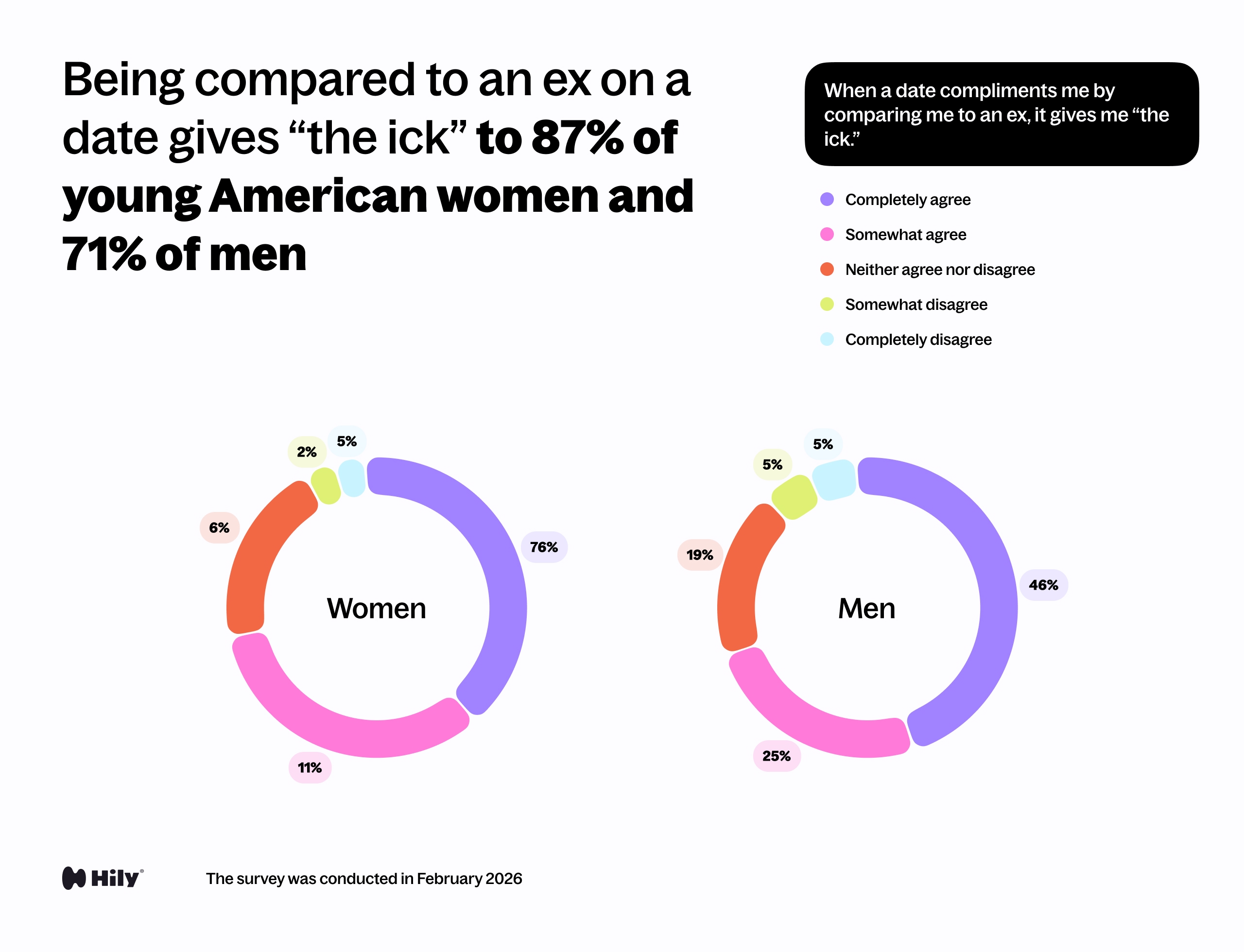
Being compared to an ex gives 87% of women and 71% of men the ick. Compliments should make someone feel chosen, not measured against someone else.
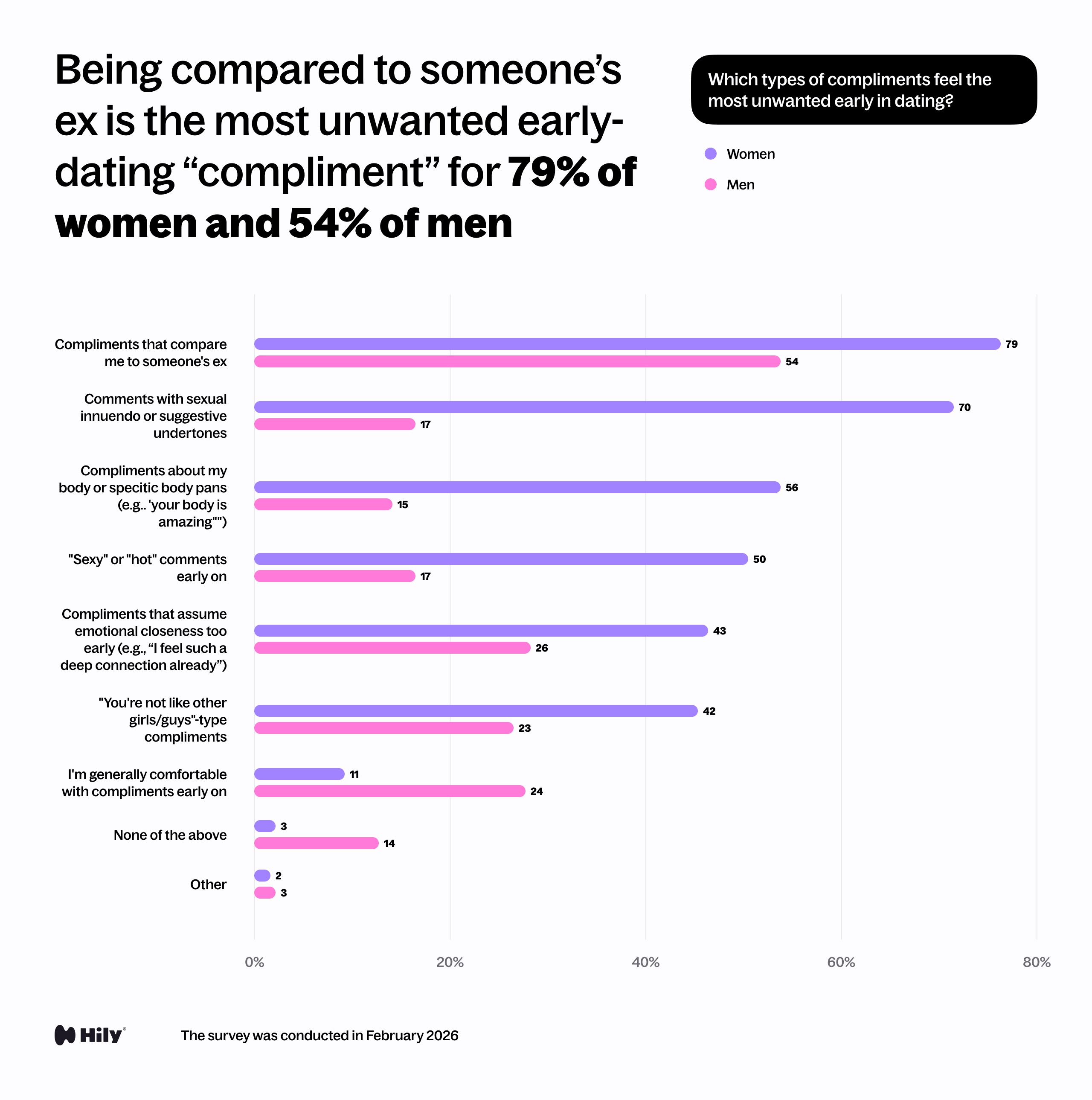
According to survey responses, being compared to someone’s ex is the most unwanted compliment in the early dating stages for 79% of women and 54% of men. Nothing kills potential chemistry faster than a comparison to a partner from the past.
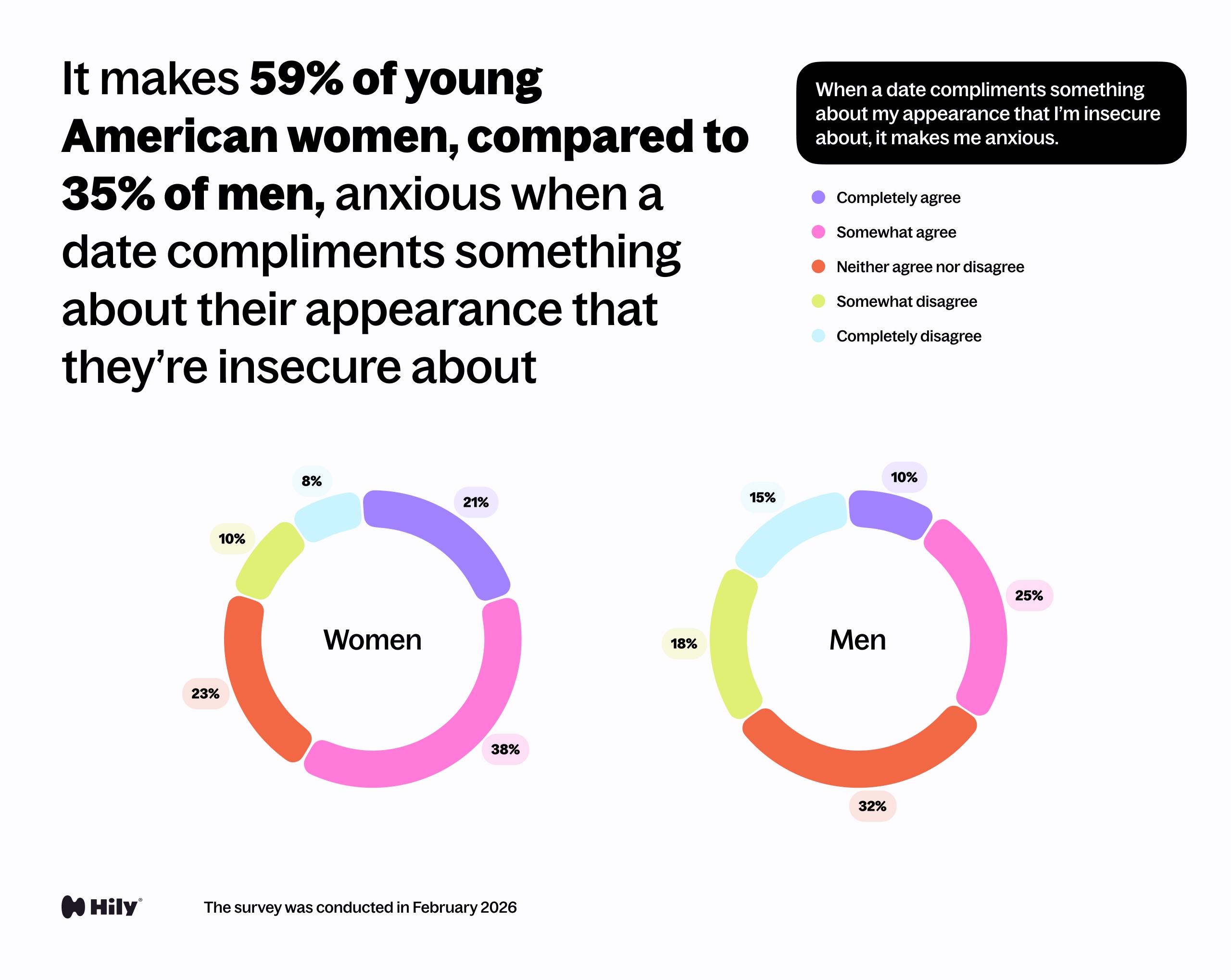
Of those surveyed, 59% of women and 35% of men say compliments about insecurities can create anxiety. What sounds affirming and complimentary on the surface may highlight a vulnerability the other person doesn’t want in the spotlight, and attempting to reassure someone might have the opposite effect.
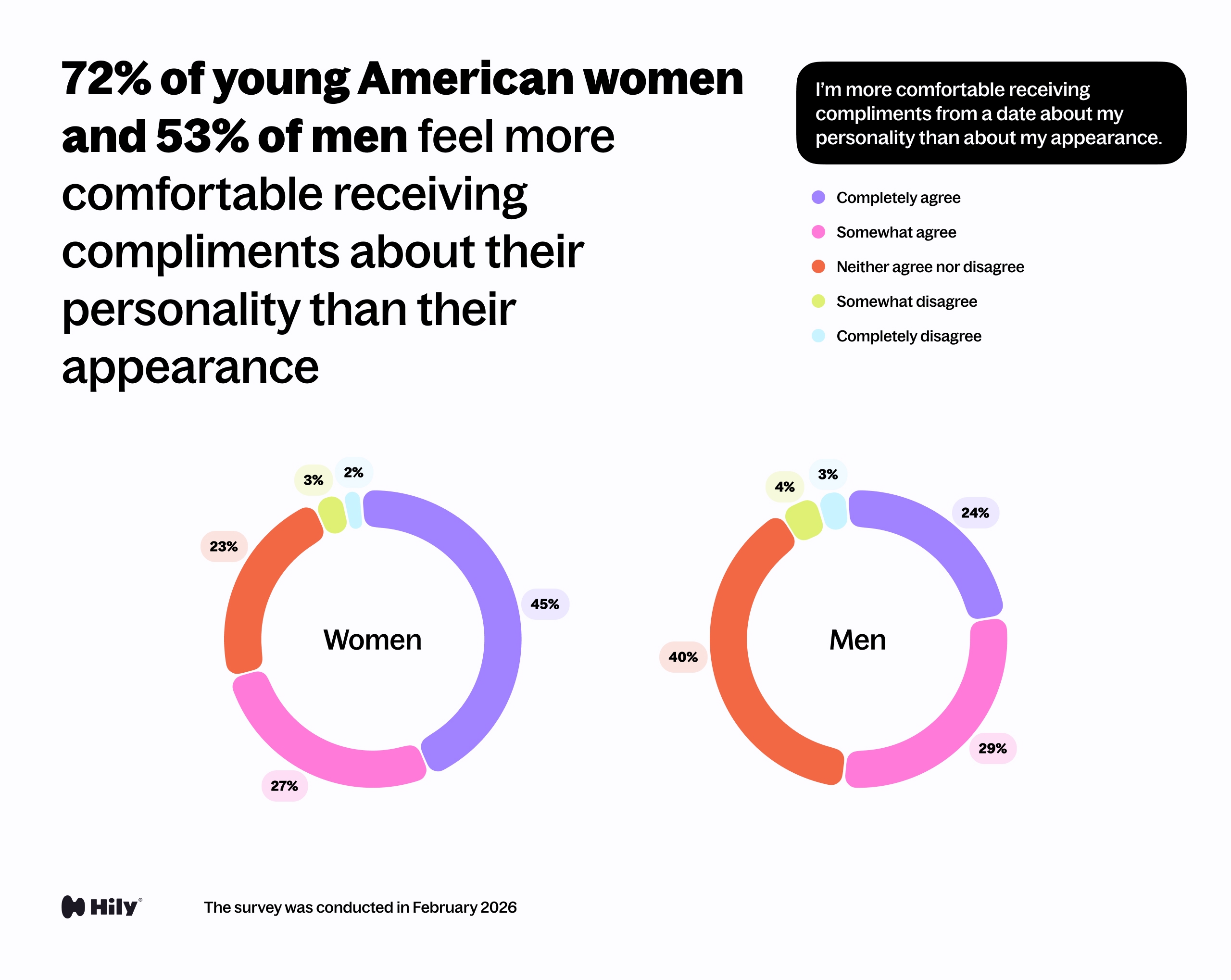
For 72% of women and 53% of men, compliments about personality are better than compliments about appearance. Being seen for who you are matters more than being admired for how you look. Depth wins over surface-level flattery—especially early on.
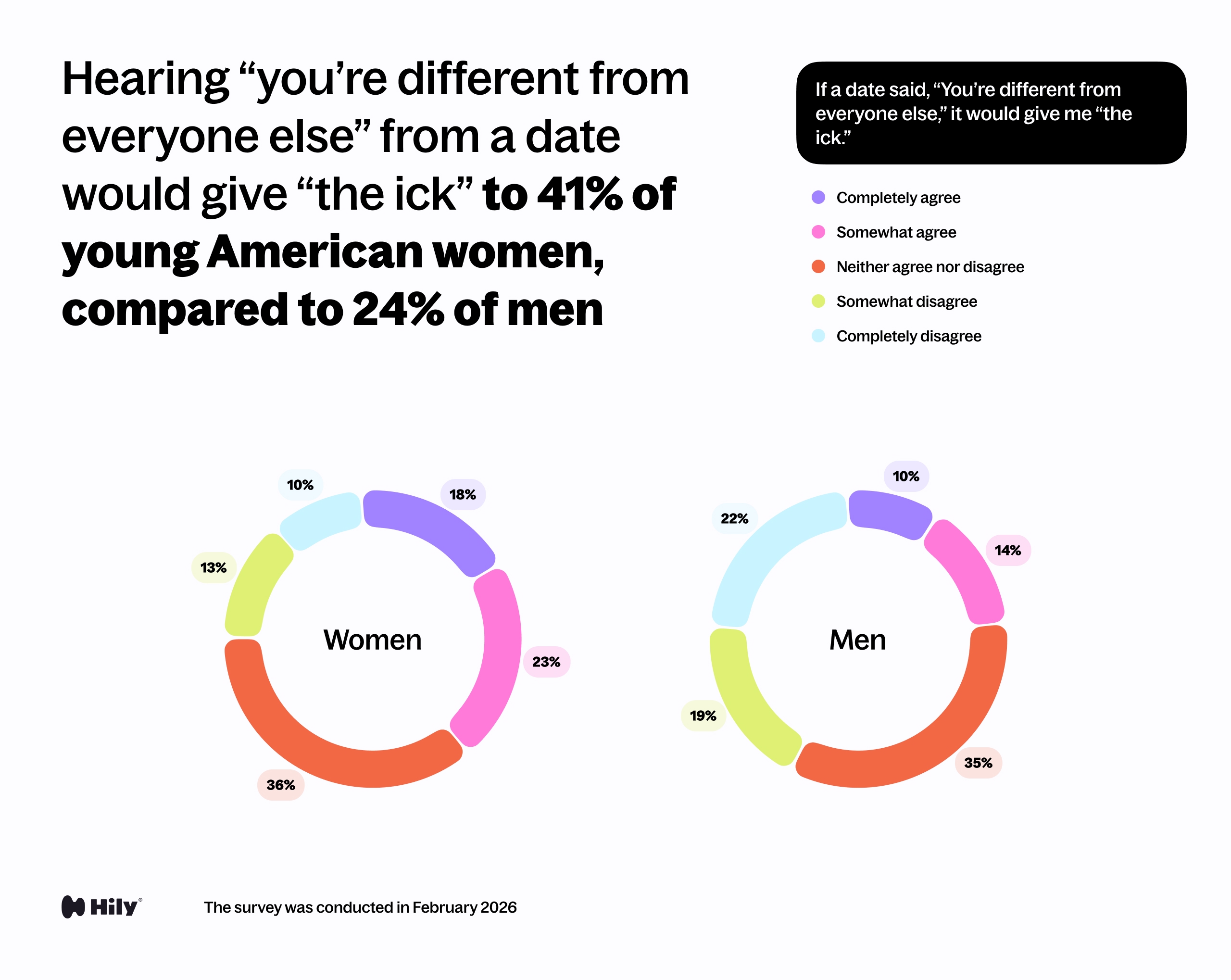
“You’re different from everyone else.” Romantic? Maybe. Original? Definitely not. For 41% of women and 24% of men, this phrase feels less special and more suspicious. What’s intended as unique praise can come across as vague or even manipulative.
Words of Affirmation Are Still Wanted
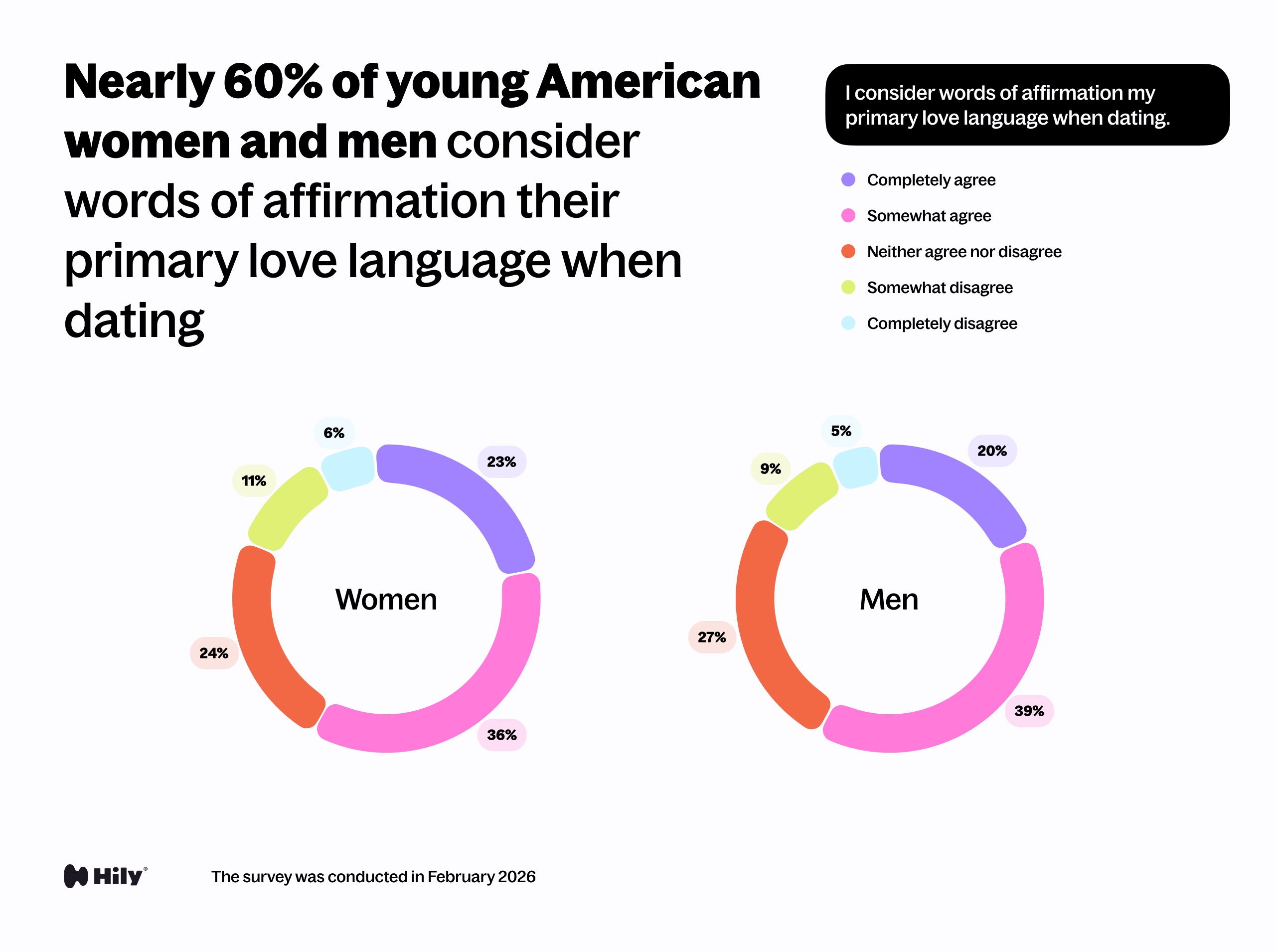
Despite the red flags, nearly 60% of young American daters say words of affirmation are their primary love language. Compliments still matter; they just need to feel genuine, well-timed and unrehearsed.
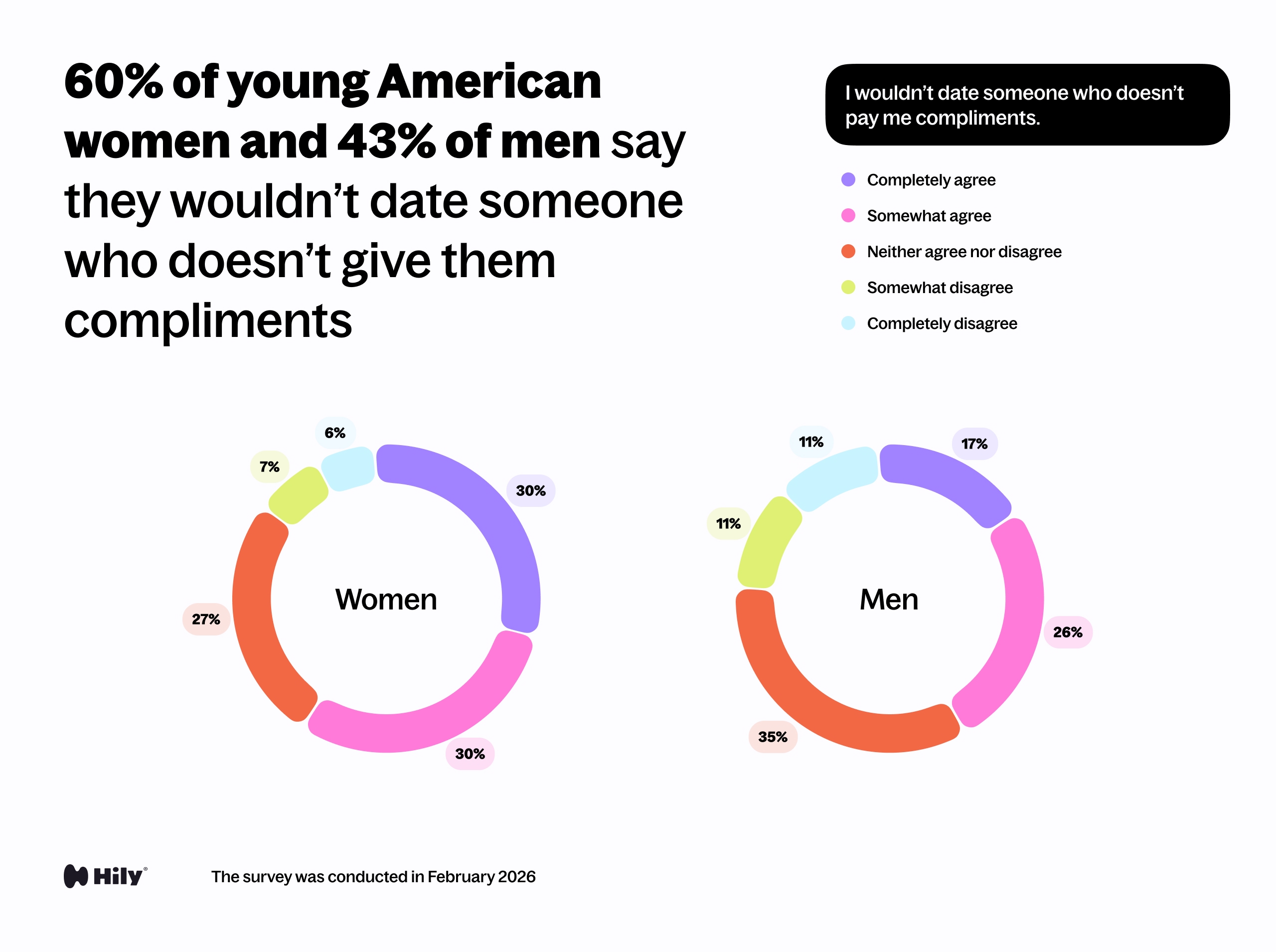
In fact, despite not wanting too many compliments too soon, 60% of women and 43% of men say they wouldn’t date someone who doesn’t compliment them at all. Silence isn’t golden in dating; appreciation still plays a key role in attraction, but what matters most is the sincerity behind it. And of course, moderation in all things.
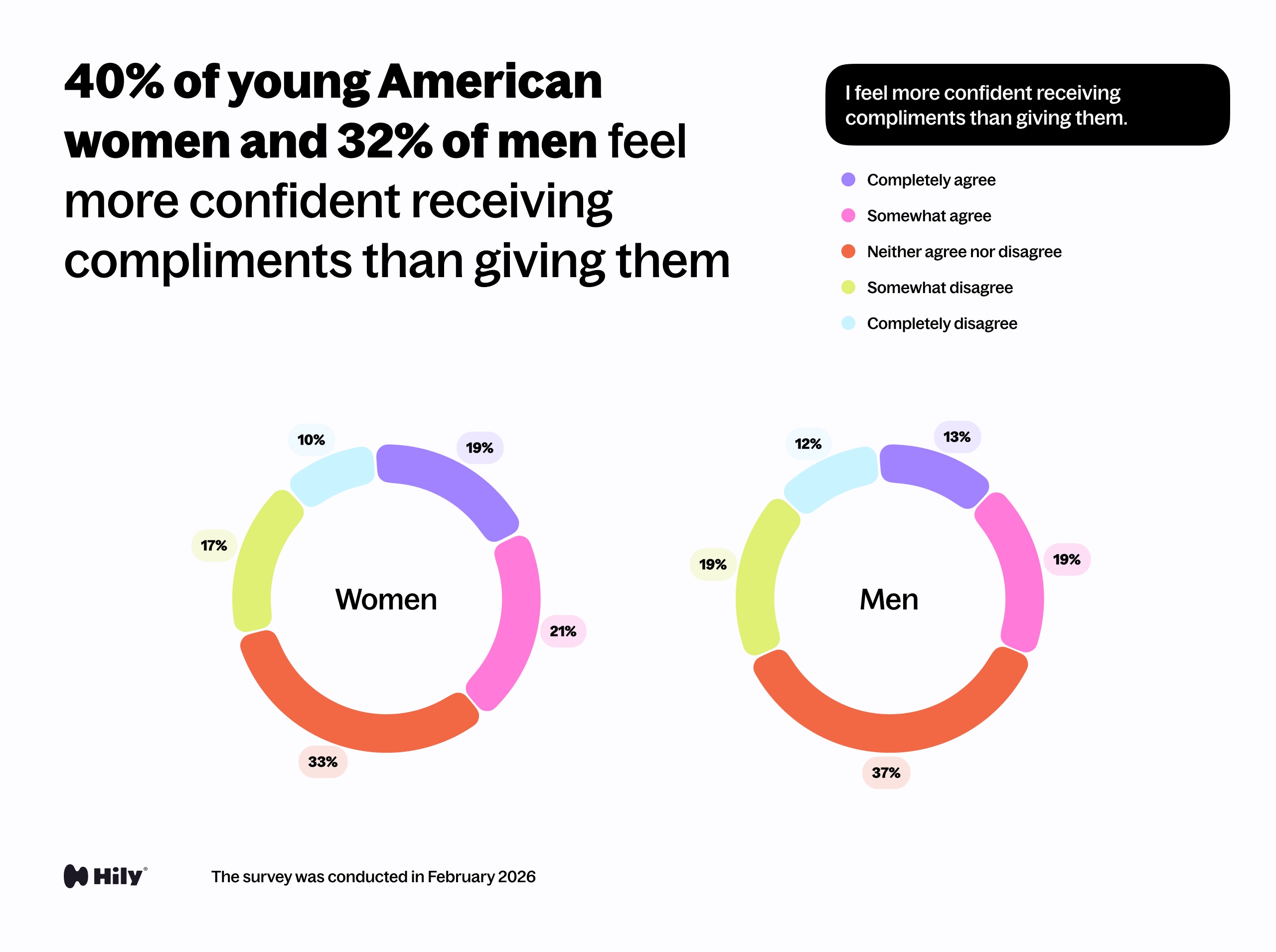
Interestingly, 40% of women and 32% of men feel more confident receiving compliments than giving them. While many crave affirmation, expressing it can feel more vulnerable.
It’s Not About More Compliments—It’s About Sincere Ones
World Compliment Day may celebrate kind words, but modern dating shows that context is everything. Gen Z and Millennials aren’t rejecting compliments wholesale. They still crave reassurance, just not practiced or cliché lines.
They want praise that feels specific, thoughtful and emotionally safe. Modern daters are wary of flattery that moves too fast or feels forced and manipulative. And they’re clear about one thing: sincerity beats intensity every time.
In dating, the right compliment doesn’t rush intimacy—it creates a spark that builds trust.
The methodology
Hily’s research team surveyed 3,500 Gen Z and Millennial daters in the United States to explore how compliments are perceived in modern dating. The study examined when compliments feel flattering versus uncomfortable, how they are used on dating apps, and how factors like timing, tone and intent influence whether praise builds connection or raises red flags. The survey also analyzed gender differences in how compliments are given, received and interpreted across early dating stages.
About Hily
Hily (pronounced like ‘highly’) is a dating app designed to connect singles with new people while supporting them in remaining authentic. Short for “Hey, I Like You,” it invites users to have fun and not look for a perfect match.
By encouraging everyone to date as they are, Hily is breaking one of the biggest curses of online dating—feeling pressured to hide your true self. Praising self-exploration, self-acceptance, open-mindedness, and inclusivity, the app helps people put real connections first and keep competition at bay by unlocking their unique, fabulous selves. With features like icebreakers, compatibility checks, messaging, Major Crush, and zodiac synastry, Hily helps users express who they really are and connect in genuine ways.
Launched in 2017, Hily has become one of the top 10 dating apps in US app stores, with over 39 million users worldwide.